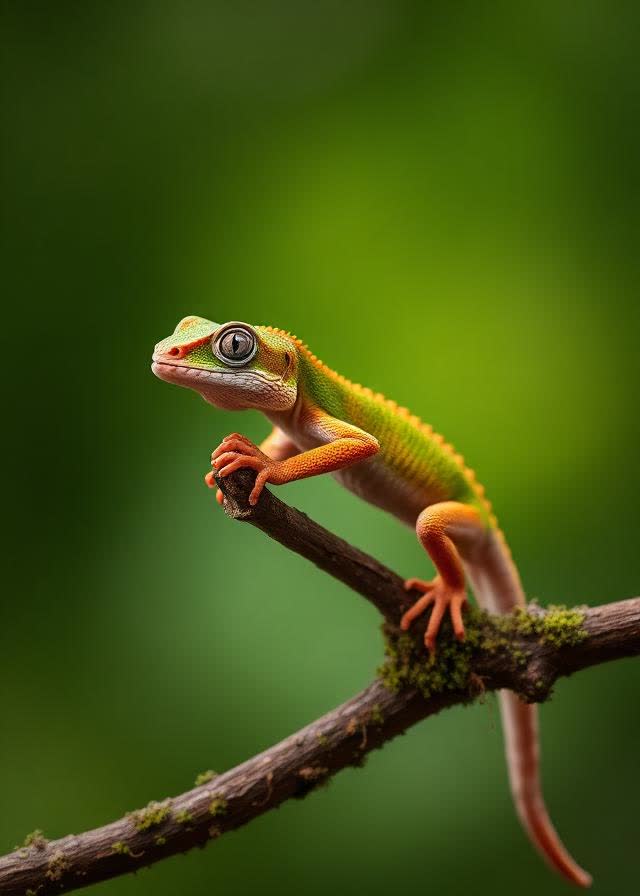
Leopard Gecko care guide
Eublepharis macularius
A ground-dwelling, crepuscular gecko with eyelids, a friendly disposition and a huge morph catalogue. One of the best starter lizards available.
Quick reference
Temperature
Warm hide floor 90–94°F, ambient 75–80°F, cool side 70–75°F
Humidity
30–40% with a permanently damp humid hide
Lighting
Low-level UVB (2–5%) improves health; 12-hour photoperiod
Enclosure size
Adults: 36x18x18 in minimum, floor space matters more than height
Lifespan
15–20 years
Adult size
8–11 in
Substrate
Tile, a soil/sand mix or bioactive; avoid loose calcium sand
Water
Shallow bowl, always available
Setup checklist
Everything that should be running and stable before the animal comes home. Print this and tick it off.
- Adult-sized enclosure: Adults: 36x18x18 in minimum, floor space matters more than height
- Heat source on a thermostat — never plugged straight into the wall (Warm hide floor 90–94°F, ambient 75–80°F, cool side 70–75°F)
- Digital probe thermometer for the warm side and a second for the cool side
- Digital hygrometer
- Lighting: Low-level UVB (2–5%) improves health; 12-hour photoperiod
- Substrate: Tile, a soil/sand mix or bioactive; avoid loose calcium sand
- At least two hides — one warm, one cool
- Water bowl, heavy enough not to tip
- Clutter: cork bark, branches, plants and leaf litter for cover
- Reptile-safe disinfectant and paper towel for spot cleaning
Supplies & shopping list
Enclosure
- •Adults: 36x18x18 in minimum, floor space matters more than height
- •Secure lock or clips
- •Background or opaque sides for security
Heating
- •Warm hide floor 90–94°F, ambient 75–80°F, cool side 70–75°F
- •Thermostat (dimming or pulse-proportional)
- •Digital probe thermometers
- •Infrared temp gun for surface readings
Lighting
- •Low-level UVB (2–5%) improves health; 12-hour photoperiod
- •Timer for a consistent 12/12 photoperiod
Substrate
- •Tile, a soil/sand mix or bioactive; avoid loose calcium sand
- •Spare bag for full changes
Decor
- •Two hides
- •Cork bark, branches or climbing structure
- •Leaf litter and plants for cover
- •Water bowl
Food & tools
- •Live insects: dubia roaches, crickets, black soldier fly larvae; mealworms and waxworms as treats
- •Juveniles daily, adults every 2–3 days; dust with calcium + D3 and a multivitamin
- •Feeding tongs
- •Hygrometer
- •Reptile-safe disinfectant
Diet & feeding
What they eat
Live insects: dubia roaches, crickets, black soldier fly larvae; mealworms and waxworms as treats
How often
Juveniles daily, adults every 2–3 days; dust with calcium + D3 and a multivitamin
Water
Shallow bowl, always available
Handling
Very tolerant; never grab or restrain by the tail
Beginner mistakes to avoid
- •Relying on an overhead bulb alone with no belly heat for digestion
- •Skipping the humid hide, which causes stuck shed on toes and eyes
- •Feeding mealworms and waxworms as the staple diet
- •Grabbing the tail — it drops and never grows back the same
Common problems to watch for
- •Metabolic bone disease from poor supplementation
- •Impaction associated with loose particulate substrate and low temperatures
- •Stuck shed on toes and around eyes — the humid hide prevents it
When to see a vet
Any of these warrant an appointment with an experienced exotics veterinarian, not a wait-and-see.
- •Soft or rubbery jaw, tremors, twitching or dragging back legs — metabolic bone disease
- •Not passing stool for over a week with a loss of appetite — possible impaction
- •Swollen limbs or joints, or a jaw that no longer closes
- •Discharge from the eyes, nose or mouth; laboured breathing
- •Sudden weight loss, sunken eyes or a persistently dark stress colour
Myths vs facts
UVB is optional if you feed supplements.
Fact: Most diurnal lizards need UVB to synthesise D3. Supplements alone rarely prevent metabolic bone disease.
A bulb that still lights up is still producing UVB.
Fact: UV output decays long before the bulb fails. Replace on schedule, typically every 12 months.
Loose substrate always causes impaction.
Fact: Impaction is usually driven by low temperatures, dehydration or poor diet — not by substrate on its own.
Keeper tips
- •Belly heat drives digestion: use an under-tank heater on a thermostat or a low overhead heat source
- •Gut-load feeder insects 24 hours before offering them
These guides describe widely accepted husbandry practice and are not veterinary advice. Consult an experienced exotics veterinarian for health concerns.