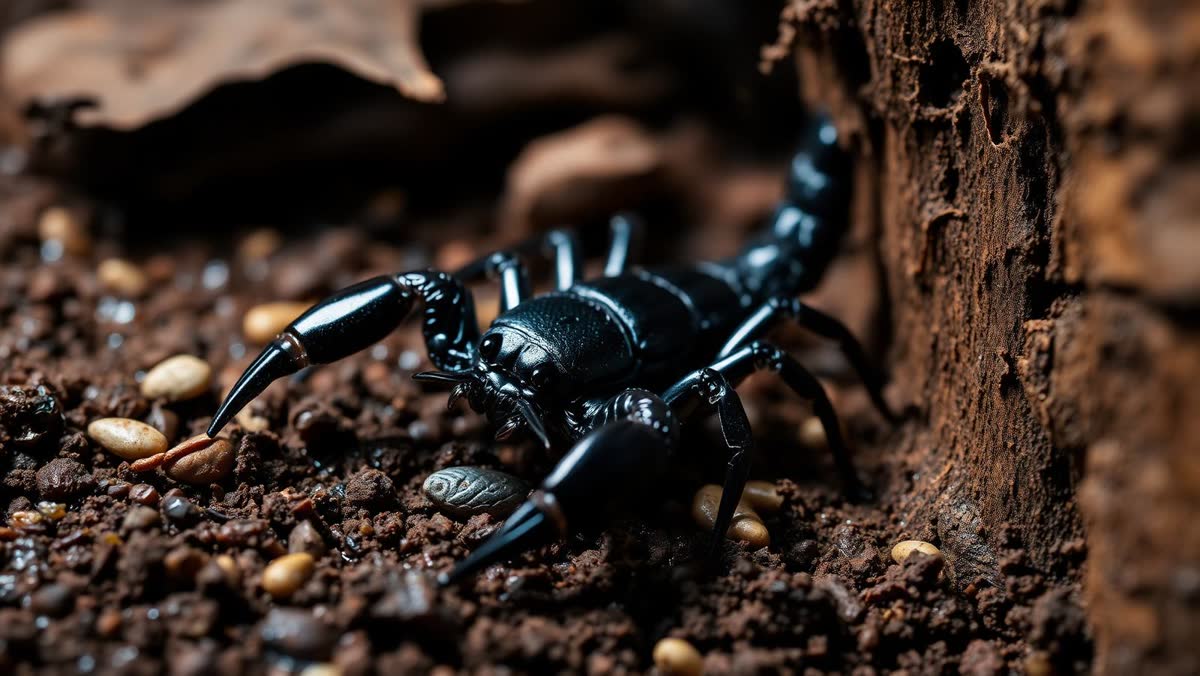
Emperor Scorpion care guide
Pandinus imperator
A large, glossy, communal-tolerant scorpion with mild venom and a striking appearance under blacklight.
Quick reference
Temperature
78–86°F warm side, 75°F cool
Humidity
70–80%
Lighting
None required
Enclosure size
10–20 gallon footprint per adult, with cork bark hides
Lifespan
6–8 years
Adult size
6–8 in
Substrate
Moist coco fiber/soil, 4–6 in for burrowing
Water
Shallow dish, always available
Setup checklist
Everything that should be running and stable before the animal comes home. Print this and tick it off.
- Enclosure with cross-ventilation: 10–20 gallon footprint per adult, with cork bark hides
- Substrate deep enough to burrow: Moist coco fiber/soil, 4–6 in for burrowing
- Cork bark hide or starter burrow
- Shallow water dish
- Hygrometer and a spray bottle for spot-moistening
- Long feeding tongs
Supplies & shopping list
Enclosure
- •10–20 gallon footprint per adult, with cork bark hides
- •Secure lock or clips
- •Background or opaque sides for security
Heating
- •78–86°F warm side, 75°F cool
- •Thermostat (dimming or pulse-proportional)
- •Digital probe thermometers
- •Infrared temp gun for surface readings
Lighting
- •None required
- •Timer for a consistent 12/12 photoperiod
Substrate
- •Moist coco fiber/soil, 4–6 in for burrowing
- •Spare bag for full changes
Decor
- •Two hides
- •Cork bark, branches or climbing structure
- •Leaf litter and plants for cover
- •Water bowl
Food & tools
- •Crickets, roaches and occasional mealworms
- •Every 3–7 days depending on size
- •Feeding tongs
- •Hygrometer
- •Reptile-safe disinfectant
Diet & feeding
What they eat
Crickets, roaches and occasional mealworms
How often
Every 3–7 days depending on size
Water
Shallow dish, always available
Handling
Not recommended; the sting is mild but the pinch is not
Beginner mistakes to avoid
- •Housing a terrestrial species in a tall enclosure where a fall can be fatal
- •Disturbing or feeding an animal that is in premoult or moulting
- •Over-misting until mould and mites take hold
- •Assuming no water dish is needed — dehydration kills slowly and quietly
Common problems to watch for
- •Dehydration in dry setups
- •Cannibalism when underfed in communal groups
When to see a vet
Any of these warrant an appointment with an experienced exotics veterinarian, not a wait-and-see.
- •A stuck or incomplete moult — do not intervene without advice
- •A leaking wound from a fall — an emergency for a tarantula
- •Prolonged lethargy with a shrunken abdomen and no interest in water
- •Death curl (legs tucked underneath) — usually dehydration, act immediately
Myths vs facts
Tarantula bites are medically dangerous.
Fact: New World species have mild venom; the bigger risks are urticating hairs and dropping the animal.
A spider on its back is dying.
Fact: That is the normal moulting posture. Leave it completely alone for about a week.
Invertebrates do not need water dishes.
Fact: Dehydration is the most common cause of death in captive inverts. Keep a shallow dish full.
Keeper tips
- •Keep the substrate damp at depth and dry at the surface
These guides describe widely accepted husbandry practice and are not veterinary advice. Consult an experienced exotics veterinarian for health concerns.