Red-Eared Slider care guide
Trachemys scripta elegans
A large, messy, long-lived aquatic turtle. Cheap to buy and expensive to house properly — filtration is the entire hobby with this species.
Quick reference
Temperature
Water 75–80°F, basking surface 90–95°F
Humidity
N/A (aquatic) — but the basking area must dry fully
Lighting
T5 UVB over the dry basking dock, replaced yearly
Enclosure size
10 gallons of water per inch of shell — an adult female needs 100+ gallons or a stock tank/pond
Lifespan
30–40 years
Adult size
Females 10–12 in, males 6–9 in
Substrate
Bare bottom or large river rock for easy cleaning
Water
Canister filter rated for 2–3x the tank volume, plus weekly partial changes
Setup checklist
Everything that should be running and stable before the animal comes home. Print this and tick it off.
- Tank sized for an adult: 10 gallons of water per inch of shell — an adult female needs 100+ gallons or a stock tank/pond
- Cycled filter rated above the tank volume, with gentle flow
- Accurate thermometer — and a chiller or fan if the room runs warm
- Liquid test kit for ammonia, nitrite, nitrate and pH
- Water conditioner / dechlorinator
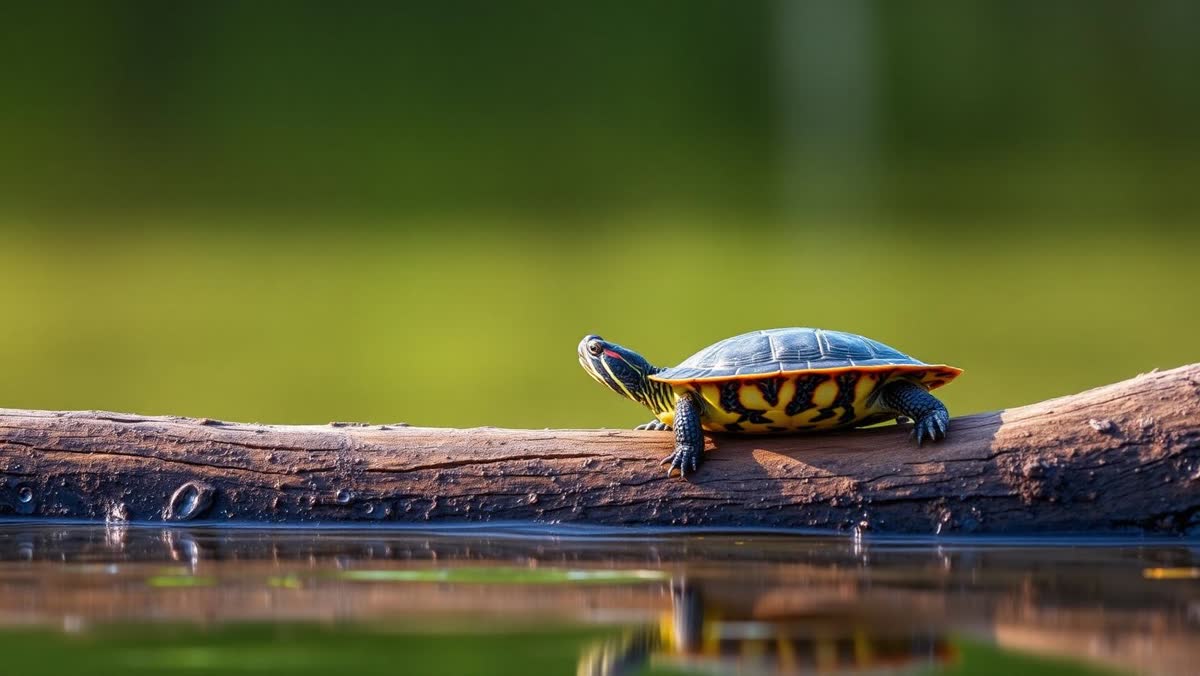
- Dry basking platform with a heat lamp and UVB overhead
- Fine sand or a bare bottom — never gravel
- Siphon and buckets kept only for animal use
Supplies & shopping list
Tank
- •10 gallons of water per inch of shell — an adult female needs 100+ gallons or a stock tank/pond
- •Secure lid or screen top
- •Stand rated for the filled weight
Filtration & water
- •Canister or sponge filter
- •Water conditioner
- •Liquid test kit
- •Siphon and buckets
Temperature
- •Water 75–80°F, basking surface 90–95°F
- •Submersible heater on a controller
Lighting
- •T5 UVB over the dry basking dock, replaced yearly
Substrate & decor
- •Bare bottom or large river rock for easy cleaning
- •Caves, driftwood and shade plants
Food & tools
- •Quality pellets, leafy aquatic greens, occasional protein; adults shift toward herbivory
- •Feeding tongs
- •Food storage container
Diet & feeding
What they eat
Quality pellets, leafy aquatic greens, occasional protein; adults shift toward herbivory
How often
Juveniles daily, adults every other day; feed a portion the size of the head
Water
Canister filter rated for 2–3x the tank volume, plus weekly partial changes
Handling
Minimal; they may bite and always carry Salmonella risk — wash hands
Beginner mistakes to avoid
- •Housing a hatchling in a tank it will outgrow within two years
- •Running no UVB, or UVB filtered through glass or plastic — both block it
- •Feeding a protein- or fruit-heavy diet that causes shell pyramiding or kidney damage
- •Neglecting water quality and filtration for aquatic species
Common problems to watch for
- •Shell rot from a basking dock that never dries
- •Poor water quality and eye swelling
- •Illegal release — never release into the wild
When to see a vet
Any of these warrant an appointment with an experienced exotics veterinarian, not a wait-and-see.
- •Soft, pitted or foul-smelling shell — shell rot
- •Swollen or closed eyes, nasal bubbling, or wheezing
- •Listing to one side while swimming, or floating unevenly
- •Beak overgrowth, pyramiding or a mouth that will not close
- •Refusing food for over a week with lethargy
Myths vs facts
They stay small if kept in a small tank.
Fact: Stunting is a welfare failure, not a size control. Adults need the space they need.
A basking lamp through glass gives them UVB.
Fact: Glass and most plastics block UVB entirely. The lamp must shine directly on the animal.
Fruit and lettuce make a good staple diet.
Fact: Most species need high-fibre weeds and greens; sugary fruit disrupts gut flora.
Keeper tips
- •Buy the filter for the adult size on day one, not the hatchling size
These guides describe widely accepted husbandry practice and are not veterinary advice. Consult an experienced exotics veterinarian for health concerns.